

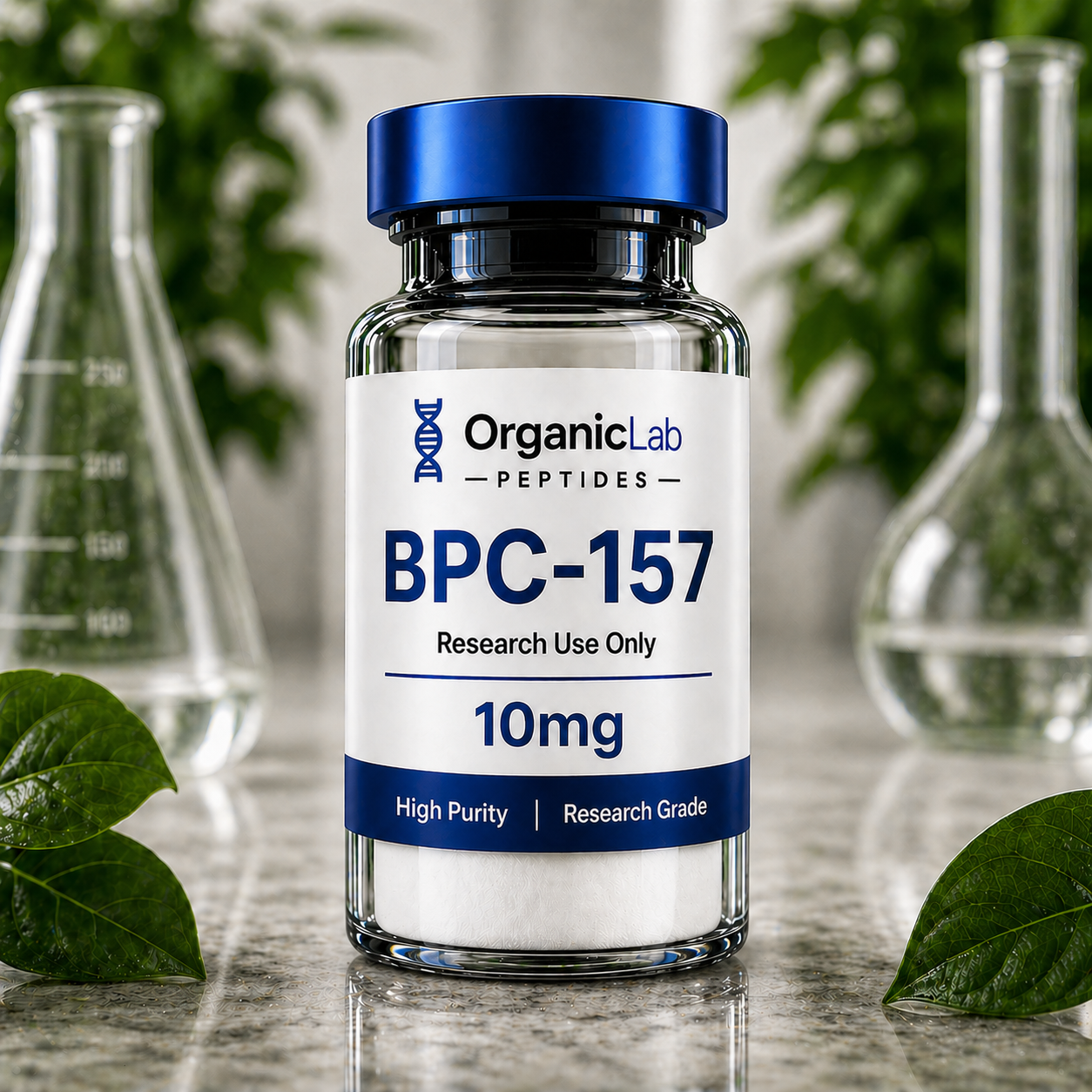
Cytoprotective Gastric Peptide
A Gastric-Derived Peptide with Broad Tissue Repair Activity
BPC-157 (Body Protection Compound-157) is a synthetic 15-amino-acid peptide derived from a naturally occurring cytoprotective protein found in human gastric juice. It has accumulated one of the most extensive preclinical literatures of any research peptide, demonstrating repair activity across a wide range of tissue types. Notably, it exhibits exceptional stability in gastric acid — a property that distinguishes it from most peptide compounds and broadens its applicability in research models.
- 15-amino-acid sequence derived from a gastric cytoprotective protein
- Documented activity across gut, tendon, muscle, bone, and neural tissue
- Cytoprotective and anti-inflammatory properties well-characterized
- Exceptional stability in gastric acid — unique among research peptides
- High purity (≥99%) for reproducible experimental outcomes
For laboratory research use only. Not for human consumption.

Multi-Pathway Healing Mechanism
Angiogenesis, Growth Factor Signaling and Inflammatory Resolution
BPC-157 engages multiple repair-relevant biological pathways simultaneously. It promotes angiogenesis through upregulation of VEGF expression, enhances local nitric oxide production to support tissue perfusion, and activates downstream growth signaling cascades including ERK1/2 and AKT pathways in damaged tissue. In parallel, it suppresses pro-inflammatory mediators — including IL-6, TNF-α, and COX-2 — creating a biochemical environment conducive to organized repair rather than chronic inflammation.
- Promotes angiogenesis through VEGF pathway upregulation
- Enhances nitric oxide production for improved tissue oxygenation
- Activates ERK1/2 and AKT growth signaling in injured tissue
- Suppresses IL-6, TNF-α, and COX-2 inflammatory mediators
- Modulates serotonin and dopamine neurotransmitter systems
For laboratory research use only. Not for human consumption.

Research Applications
Gastrointestinal, Musculoskeletal and Neurological Research
BPC-157 has been studied across a notably diverse range of tissue systems in preclinical models. Its gastric origin makes it a natural fit for gut and mucosal integrity research, while its angiogenic and growth factor-activating properties extend its relevance to musculoskeletal, dermal, and neurological repair contexts. This cross-tissue applicability has made it one of the most widely referenced compounds in preclinical regenerative research.
- Gastrointestinal healing, ulcer repair, and mucosal integrity studies
- Tendon and ligament regeneration modeling
- Skeletal muscle injury and recovery research
- Wound healing and dermal tissue repair investigation
- Neuroprotective pathway and neurological repair exploration
- Anti-inflammatory mechanism studies across multiple tissue types
For laboratory research use only. Not for human consumption.

BPC-157: A Multi-Pathway Repair Peptide with Cross-Tissue Research Applications
BPC-157 is a 15-amino-acid synthetic peptide derived from a cytoprotective protein naturally present in gastric juice. Its research profile spans a wider range of tissue systems than most comparable compounds, with documented preclinical activity in gastrointestinal, musculoskeletal, dermal, vascular, and neurological contexts. This breadth reflects the multi-pathway nature of its mechanism — rather than targeting a single repair process, it engages several simultaneously.
At the vascular level, BPC-157 promotes angiogenesis through increased VEGF expression and supports microvascular perfusion via nitric oxide pathway activation. Both processes are foundational to tissue repair: without adequate blood supply, downstream repair processes are constrained regardless of other interventions. BPC-157's capacity to stimulate new vessel formation while simultaneously improving flow through existing vasculature addresses this supply constraint at two points.
At the cellular and molecular level, it activates ERK1/2 and AKT signaling cascades in cells exposed to injury conditions — pathways associated with cell survival, proliferation, and migration. Concurrent suppression of pro-inflammatory cytokines including IL-6, TNF-α, and the COX-2 enzyme resolves the inflammatory environment that would otherwise impede organized repair. The combination of angiogenic, trophic, and anti-inflammatory activity within a single compound explains why BPC-157 has become a reference point in multi-tissue regenerative research.
Its stability in gastric acid — unusual among peptides — reflects its origin in a biologically harsh environment and expands its practical research utility. For teams investigating gastrointestinal integrity, musculoskeletal repair, wound healing, or the pharmacology of multi-pathway repair peptides, BPC-157 provides one of the most thoroughly characterized and broadly applicable tools currently available in preclinical research.
For research use only. Not for human consumption.