

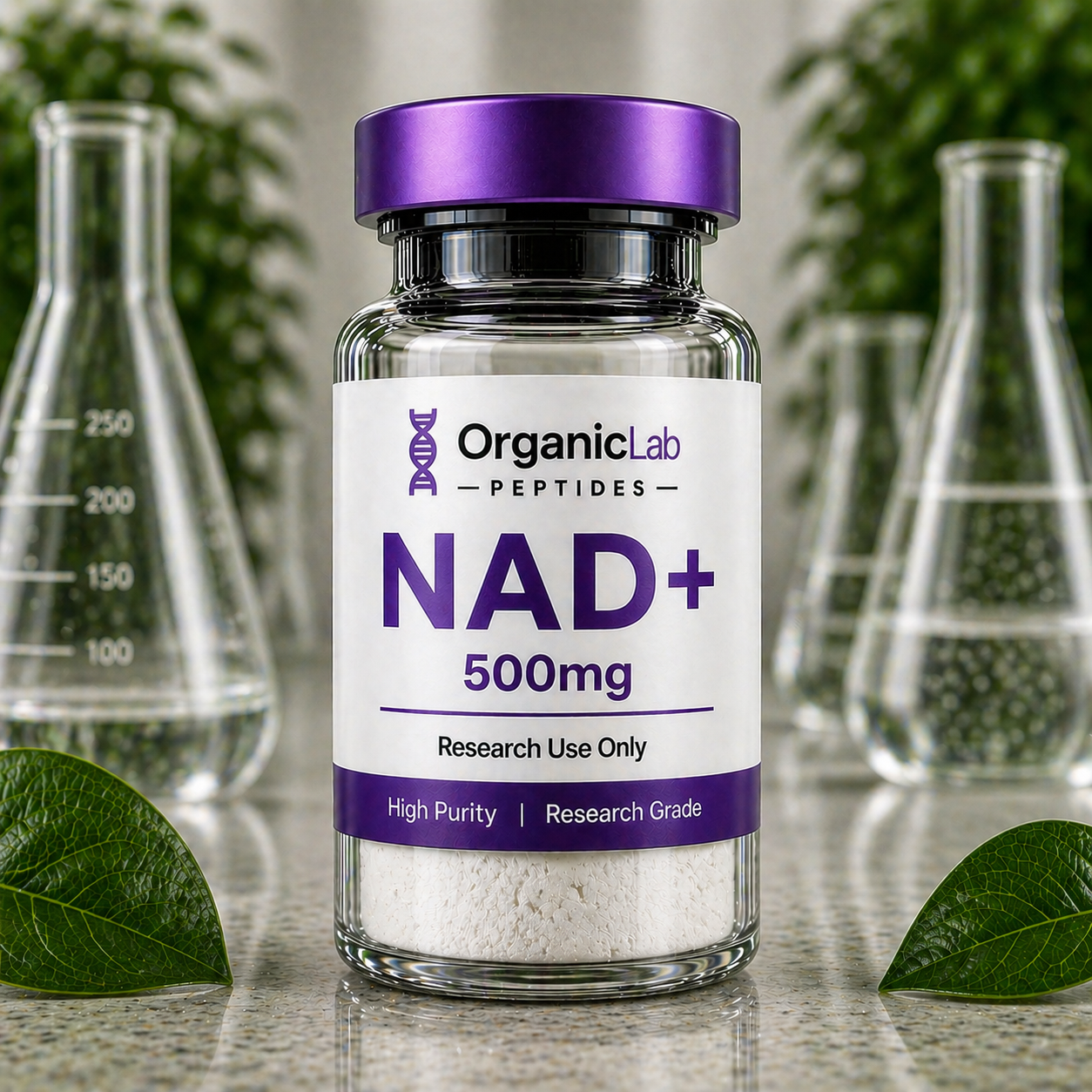
Essential Cellular Coenzyme
A Coenzyme at the Core of Energy, Repair and Aging Research
NAD+ (Nicotinamide Adenine Dinucleotide) is a coenzyme present in every living cell, participating in hundreds of enzymatic reactions spanning energy metabolism, genomic maintenance, and mitochondrial regulation. Its intracellular concentration decreases progressively with age — a decline now considered a key feature of cellular aging — making it a central focus for researchers investigating longevity, metabolic health, and age-related dysfunction.
- Coenzyme involved in hundreds of cellular enzymatic reactions
- Core role in glycolysis, the TCA cycle, and oxidative phosphorylation
- Required for DNA damage detection and repair
- Supports mitochondrial biogenesis and respiratory function
- High purity (≥98%) suitable for in vitro research protocols
For laboratory research use only. Not for human consumption.

Cellular Mechanisms
Electron Transfer, Sirtuin Activation and DNA Repair: Three Distinct Roles
NAD+ operates across three functionally distinct roles within the cell. As a redox cofactor, it shuttles electrons through metabolic pathways to drive ATP synthesis. As a signaling molecule, it serves as the obligate substrate for sirtuins — a family of deacylase enzymes linked to stress resistance and metabolic regulation — and for PARPs, which detect and coordinate the repair of DNA strand breaks. A third role involves CD38-mediated immune signaling, connecting NAD+ availability to inflammatory regulation.
- Redox carrier driving ATP generation across metabolic pathways
- Obligate substrate for sirtuins (SIRT1–7) and their downstream effects
- Required cofactor for PARP-mediated DNA damage response
- Involvement in CD38 signaling and immune cell function
- Role in circadian clock regulation and transcriptional timing
For laboratory research use only. Not for human consumption.

Research Applications
Aging, Neuroprotection and Metabolic Health: A Broad Research Platform
NAD+ has become a reference compound across multiple fields of biomedical research, particularly in studies focused on cellular aging, mitochondrial dysfunction, and metabolic resilience. Its documented decline with age, combined with its central role in sirtuin and PARP activity, makes it an essential tool for researchers modeling age-related pathology and investigating molecular strategies for healthspan extension.
- Aging biology and cellular senescence pathway studies
- Mitochondrial bioenergetics and respiratory chain research
- DNA damage response and genomic stability modeling
- Insulin sensitivity and metabolic health investigation
- Neuroprotection and age-related cognitive decline studies
- Sirtuin activation and caloric restriction pathway research
For laboratory research use only. Not for human consumption.

NAD+: The Molecule Connecting Cellular Energy to the Biology of Aging
NAD+ occupies a singular position in cellular biochemistry — it is simultaneously a metabolic cofactor, a signaling substrate, and a marker of biological age. Its presence in every living cell and its involvement in fundamental processes spanning energy production, genome integrity, and stress response make it one of the most extensively studied molecules in modern biomedical research.
In its metabolic role, NAD+ accepts and donates electrons across the glycolytic pathway, the citric acid cycle, and the mitochondrial electron transport chain — enabling the conversion of nutrients into ATP. This function alone makes it indispensable to cellular viability. But its significance extends further: NAD+ is the required substrate for sirtuin deacylases, a family of enzymes that regulate gene expression, mitochondrial biogenesis, and stress resistance in response to nutrient and energy status. Without adequate NAD+, sirtuin activity drops and the downstream consequences — impaired autophagy, reduced stress tolerance, altered metabolism — accumulate over time.
NAD+ is also consumed by PARP enzymes during the DNA damage response. Each repair event draws down the cellular NAD+ pool, and in contexts of chronic genotoxic stress — characteristic of aging tissues — this continuous draw contributes to the progressive NAD+ decline observed with age. Restoring or maintaining NAD+ availability is therefore relevant not only to energy metabolism but to genomic stability and the overall fidelity of cellular maintenance systems.
For research teams investigating aging mechanisms, mitochondrial function, DNA repair pathways, or metabolic disease, NAD+ provides a well-characterized, biochemically central tool with a growing body of literature spanning cell biology, animal models, and early human studies.
For research use only. Not for human consumption.