

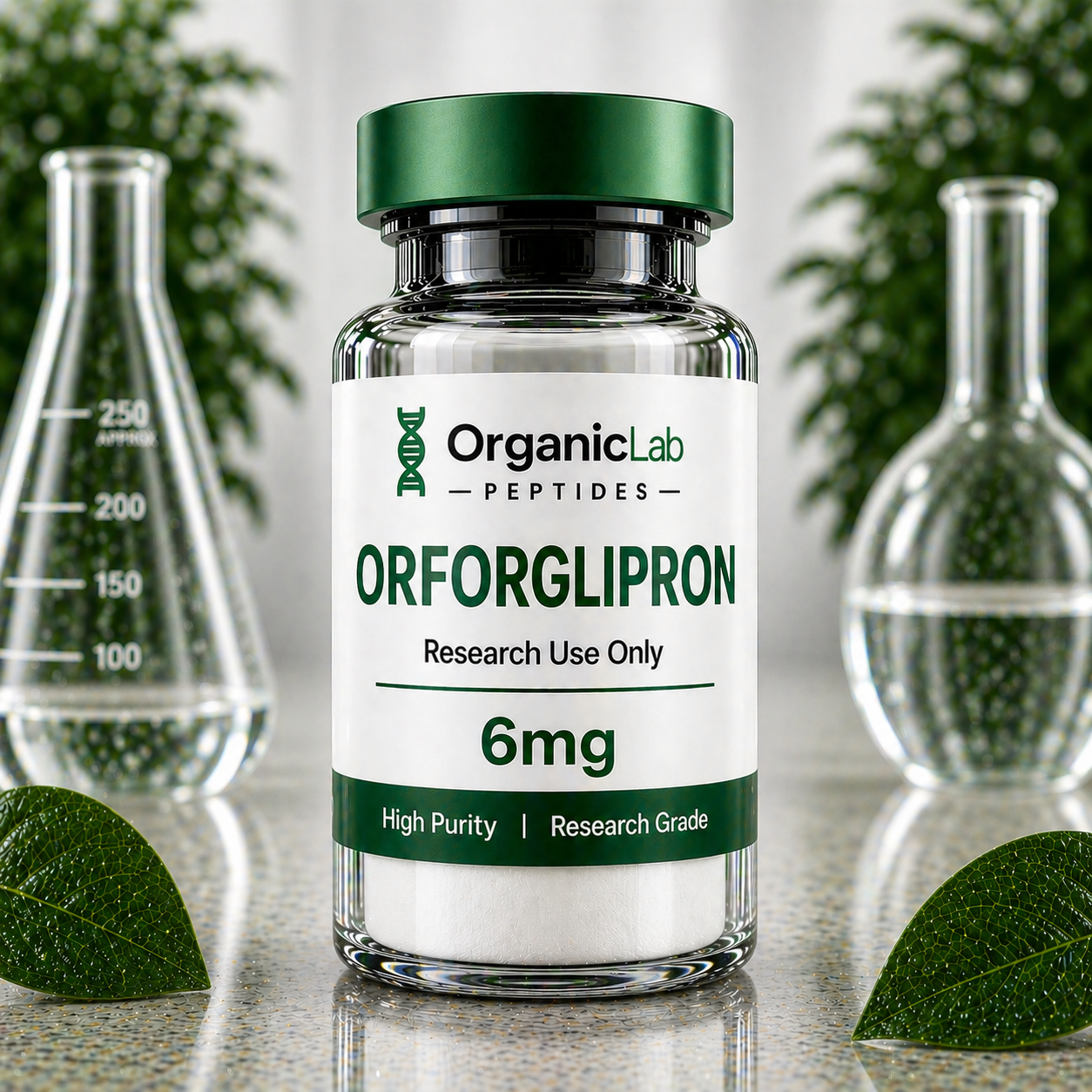
Non-Peptide GLP-1 Agonist
True Oral Bioavailability: A Small-Molecule Breakthrough in GLP-1 Research
Orforglipron (LY3502970) is a non-peptide, small-molecule partial agonist of the GLP-1 receptor that achieves genuine oral bioavailability. While peptide-based oral GLP-1 formulations require fasting protocols and absorption enhancers to reach sub-1% absorption, Orforglipron demonstrates 20–40% bioavailability in primate models with no dietary restrictions — opening new possibilities for oral incretin research.
- 20–40% oral bioavailability without food restrictions
- Non-peptide small-molecule structure enabling true oral delivery
- Once-daily administration protocol
- Clinically documented weight reduction of 8.6–14.7% over 26–36 weeks
- A1c reduction up to 2.1% in Phase 2 trials
For laboratory research use only. Not for human consumption.

Biased Agonism
cAMP Signaling Without Desensitization: The Biased Agonist Advantage
What distinguishes Orforglipron mechanistically is its biased receptor signaling profile. Its activity is strongly weighted toward cAMP (G-protein) signaling with minimal engagement of the β-arrestin pathway. cAMP activation mediates the full spectrum of beneficial GLP-1 effects — glucose regulation, gastric motility, satiety, and beta-cell support — while β-arrestin recruitment drives receptor internalization and desensitization. By selectively engaging the productive pathway, Orforglipron maintains consistent receptor responsiveness without requiring dose escalation.
- Strongly biased toward G-protein (cAMP) signaling
- Minimal β-arrestin recruitment — reduced desensitization risk
- Sustained receptor engagement without tachyphylaxis
- Binds a distinct allosteric pocket on the GLP-1 receptor
- Stable efficacy profile across extended research protocols
For laboratory research use only. Not for human consumption.

Multi-System Benefits
Metabolic, Cardiovascular and Inflammatory Pathways: A Broad Research Profile
Clinical investigation of Orforglipron reveals a broad impact across cardiovascular and inflammatory markers extending well beyond glycemic control. Documented findings include LDL reductions of 3.7–14.3%, triglyceride decreases of 8.4–16.6%, and ApoB reductions of 8.3–12.2%. CRP — a primary systemic inflammation marker — declined by 26–39.3% in trial participants. Additionally, GLP-1 receptor activation promotes beta-cell survival and proliferation, positioning this compound as a valuable tool for studying the underlying biology of metabolic disease.
- Beta-cell protection: Inhibits apoptosis, supports new cell formation
- LDL cholesterol reduction: 3.7% to 14.3%
- Triglyceride reduction: 8.4% to 16.6%
- ApoB reduction: 8.3% to 12.2%
- CRP (inflammation): 26% to 39.3% decrease
- No significant hypoglycemia observed in trials
For laboratory research use only. Not for human consumption.

Orforglipron: Rethinking What an Oral GLP-1 Agonist Can Be
Orforglipron (LY3502970) addresses two persistent limitations in GLP-1 receptor research: poor oral absorption and progressive receptor desensitization. As a non-peptide small-molecule partial agonist, it achieves 20–40% oral bioavailability in primate models with no dietary restrictions — a significant departure from peptide-based formulations that require absorption enhancers and fasting to reach sub-1% uptake.
Its signaling profile is selectively biased toward the cAMP pathway, minimizing β-arrestin engagement. This distinction has practical consequences: cAMP drives all the desired dow