

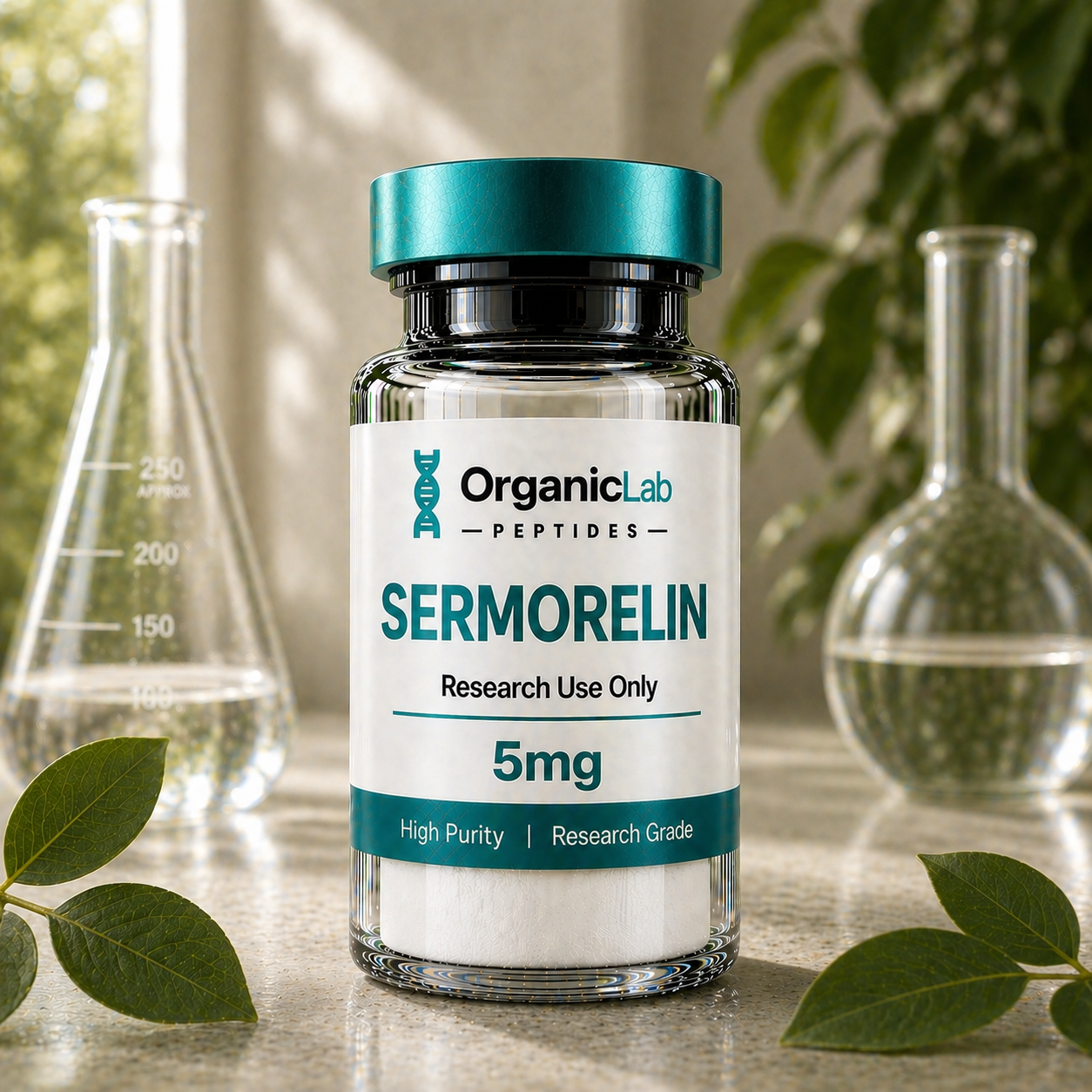
Growth Hormone-Releasing Hormone Analog
Endogenous GH Axis Stimulation Through Physiological Pathways
Sermorelin is a synthetic analog of growth hormone-releasing hormone (GHRH) that works by engaging the pituitary's native GH secretory machinery rather than bypassing it. By acting through the body's own regulatory system, Sermorelin preserves pulsatile GH secretion patterns, maintains somatostatin feedback control, and avoids the supraphysiologic hormone levels that can result from direct GH administration — making it a physiologically grounded tool for GH axis research.
- Synthetic GHRH analog targeting pituitary somatotroph cells
- Stimulates endogenous pulsatile GH secretion
- Preserves natural feedback regulation via somatostatin and IGF-1
- Lower overdose risk profile compared to exogenous GH
- Does not produce tachyphylaxis — no dose escalation required
For laboratory research use only. Not for human consumption.

Pituitary GHRH Receptor Activation
GHRH Receptor Binding, GH Pulse Generation and IGF-1 Axis Engagement
Sermorelin exerts its effects by binding to GHRH receptors on pituitary somatotroph cells, initiating the intracellular signaling cascade that drives GH synthesis and secretion. The resulting GH pulses follow the physiological pattern characteristic of endogenous secretion — brief, rhythmic, and regulated. These pulses drive downstream IGF-1 production in the liver and peripheral tissues, engaging the full GH/IGF-1 axis without circumventing its regulatory checkpoints. Research has further shown that sustained Sermorelin administration can upregulate GHRH receptor expression on somatotrophs — the opposite of the receptor downregulation observed with many continuously administered agonists.
- Binds GHRH receptors on pituitary somatotroph cells
- Initiates pulsatile GH release in a physiologically patterned manner
- Drives hepatic and peripheral IGF-1 production
- Somatostatin feedback remains intact — prevents GH excess
- Upregulates GHRH receptor expression with repeated administration
For laboratory research use only. Not for human consumption.

Research Applications
GH Axis Research, Cardiac Protection and Neuroendocrine Studies
Sermorelin's research profile extends beyond its primary role in GH axis investigation. Preclinical studies have documented effects on cardiac tissue remodeling following ischemic injury — including reduced cardiomyocyte loss, enhanced angiogenesis, and attenuated inflammatory damage. Additional lines of investigation have explored its interaction with GABAergic signaling in seizure models, and with orexin pathways relevant to sleep cycle regulation. Together, these findings position Sermorelin as a multi-domain research tool with applications well beyond conventional GH biology.
- Cardiac protection and post-ischemic tissue remodeling research
- GH/IGF-1 axis regulation and somatotroph biology
- Sleep architecture and orexin pathway modulation studies
- GABAergic signaling and seizure model research
- Age-related GH decline and axis restoration modeling
- Body composition and metabolic regulation studies
For laboratory research use only. Not for human consumption.

Sermorelin: A Physiologically Integrated Approach to GH Axis Research
Sermorelin is a synthetic GHRH analog that engages the GH secretory axis at its natural control point — the pituitary GHRH receptor — rather than introducing exogenous hormone directly into the systemic circulation. This distinction shapes its entire research profile. Because Sermorelin works within the body's existing regulatory architecture, its effects are bounded by the same feedback mechanisms that govern endogenous GH secretion: somatostatin inhibition, IGF-1 negative feedback, and the intrinsic secretory capacity of pituitary somatotrophs.
This preservation of feedback control has practical research implications. Direct GH administration bypasses these mechanisms, potentially producing supraphysiologic IGF-1 levels and the complications associated with sustained GH excess. Sermorelin, by contrast, cannot drive GH beyond what the pituitary is capable of secreting under regulatory constraints — making it more suitable for chronic protocols and for models where physiological hormone dynamics are the object of study rather than a confounding variable. Notably, rather than causing receptor downregulation, sustained Sermorelin use has been shown to enhance GHRH receptor expression on somatotrophs, improving pituitary responsiveness over time.
Beyond GH axis biology, preclinical research has identified Sermorelin activity in other physiological systems. In cardiac ischemia models, GHRH analogs have reduced cardiomyocyte apoptosis, increased extracellular matrix deposition, supported new vessel formation, and attenuated post-infarction inflammatory signaling — findings that place Sermorelin within the broader context of cardioprotective peptide research. Parallel studies have documented interactions with GABAergic signaling, which may underlie anticonvulsant effects observed in animal models, as well as modulation of the orexin system relevant to sleep and arousal research.
For research teams investigating GH/IGF-1 axis physiology, age-related somatotroph decline, cardiac repair biology, or neuroendocrine signaling, Sermorelin provides a physiologically coherent research tool that stimulates the GH axis through its native control mechanisms rather than superseding them.
For research use only. Not for human consumption.